
What I work with · Knee Pain
A knee that hasn’t settled with rest
Stairs. Getting out of the car. The first mile of a hike, or the last one. You rested it, iced it, maybe had an injection, and somewhere along the line a scan came back with the word "degenerative" on it and nobody explained what that meant for you. Knees rarely recover from being protected. They recover from being loaded properly, and almost nobody says that out loud.
Jamie Atlas, Personal Trainer & Rehab Specialist · 6× 5280 Top of the Town winner · 2× Denver A-List winner · 9NEWS fitness expert
“It's too hard to get in shape when I've had knee pain ever since I can remember”
— Cindy, a lifetime of 6/10 knee painYour results may vary.
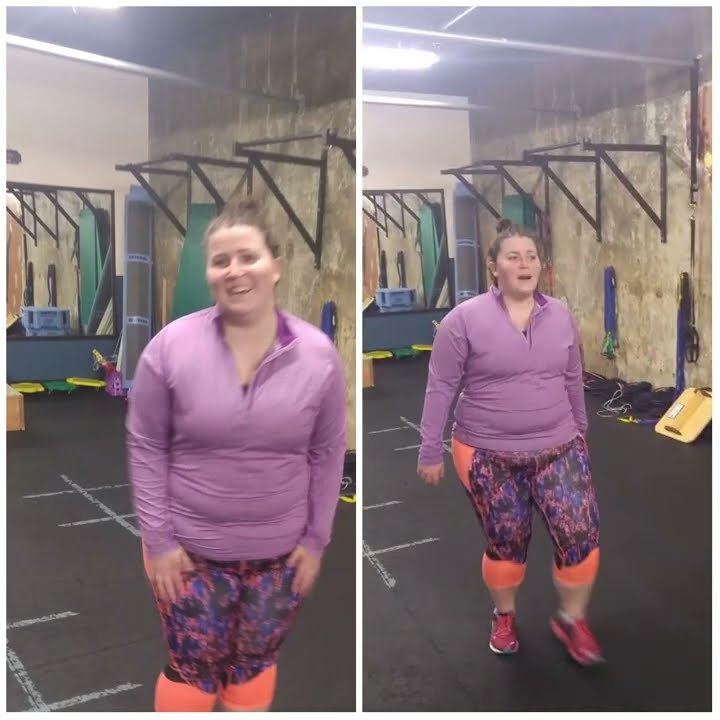 Play video: Client testimonial: Cindy, a lifetime of knee pain rated 6/10
 “I tore my ACL in an MMA match and haven't been able to train since”
— Meghan, 4/10 knee pain after an ACL tearYour results may vary.
 Play video: Client testimonial: Meghan, knee pain after an ACL tear, 4 out of 10 down to 0
 “After my fall my knee was in pain and I couldn't stand on one leg”
— Brad, 6 months of 6/10 knee painYour results may vary.
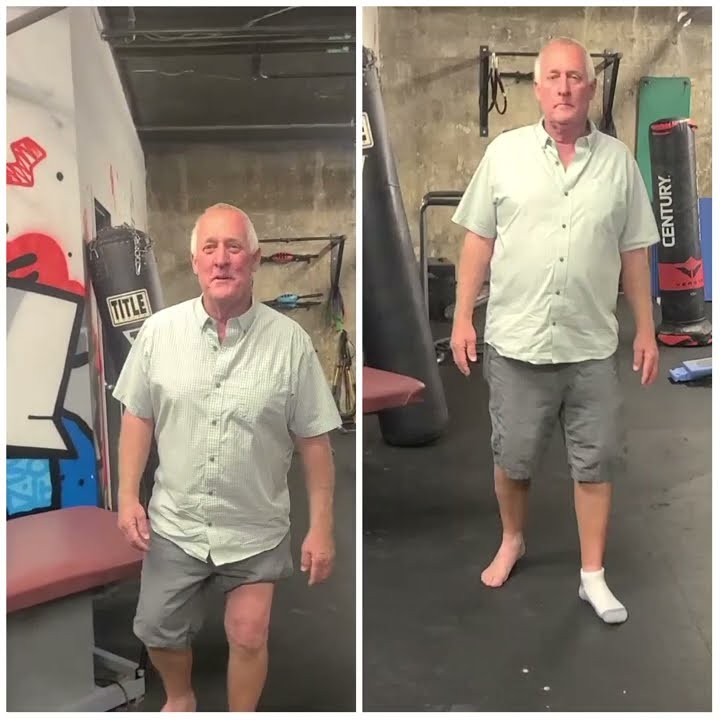 Play video: Client testimonial: Brad, 6 months of knee pain rated 6/10
 Why didn’t resting it work?
It did work, briefly, and that is what makes it so convincing. Rest settles the knee and shrinks it at the same time.
While the joint is calming down, the quads and hips around it are getting weaker and the joint’s own tolerance is dropping. Then you go back to the stairs, the trail, the ride. The demand is identical. Your capacity is not.
It flares, the obvious conclusion is more rest, and the loop tightens by one notch. What breaks it is loading the knee at a dose it can handle now, then raising that dose on purpose until it clears what your week asks of it.
I’ve been told it’s arthritis, or "bone on bone"
That sentence has ended more people’s activity than the arthritis has. "Bone on bone" is a description of an X-ray, not a prognosis.
What the joint looks like on imaging tracks poorly with how much it hurts and how well it works. Plenty of people with significant changes on film have little or no pain. Plenty with mild changes hurt a great deal. Neither group is faking.
More useful than the picture: exercise is the first-line recommendation for knee osteoarthritis in essentially every major clinical guideline written, and it reliably improves both pain and function. Not as a consolation prize before the replacement; as the plan.
It is not a reason to stop loading the leg. It is the reason to start.
What about a meniscus tear? Do I need surgery?
Depends entirely on which kind you have, and the two get talked about as though they were one thing. Most middle-aged meniscus tears are wear, not an event.
For those degenerative tears, the ones that appear gradually rather than from a specific twist you can still remember, several high-quality randomized trials have found arthroscopic surgery produces outcomes no better than structured exercise therapy. A lot of people get substantially better without an operation.
A traumatic tear, a knee that locks, a genuine mechanical block: different category, belongs with a surgeon. Working out which one you are is part of the first session, and if it is the second one I will say so plainly rather than start a program.
What does the work look like?
It starts above and below the knee, which surprises people. The joint is where it hurts. It is rarely where the problem is being decided.
So the work is progressive strength for the quads, hips and calves, the structures that determine how much load ever reaches the joint at all, alongside a graded return to whatever the pain took from you:
- a full flight of stairs without thinking about it
- the descent on a hike, not just the climb
- getting back to running, riding or skiing
- a day on your feet that doesn’t cost you the evening
You keep moving throughout, modified where it needs to be. Most people are in the six to eight session range and then carry on under their own steam.
Common questions
Will running or squatting wear my knees out faster?
No. The evidence points the other way: recreational runners have lower rates of knee osteoarthritis than sedentary people, and loaded movement is how cartilage and bone stay healthy. What causes trouble is doing too much too soon, not the movement itself.
I’m scheduled for a knee replacement. Is there any point?
Yes, on both sides of it. Going into surgery stronger is one of the better predictors of how the recovery goes, and the work afterwards is where the outcome is decided. I do a lot of the second kind.
How many sessions will I need?
Typically six to eight. You will get a realistic estimate after the first assessment rather than an open-ended commitment.
Why can it change this fast?
Pain is produced by your nervous system, not simply reported by your tissues. When pain outlasts healing, what usually keeps it going is a protection response — guarding, avoiding certain movements, a system that has learned to read ordinary load as danger. That's a learned pattern, and patterns can shift quickly when you give the system genuinely new information. Fast change proves the pain is changeable. Making it hold is the work that follows, and for most people that's six to eight sessions.
Once the pain settles, what then?
A quiet knee on the flat is not a knee you trust on a descent, in a squat rack, or on the last day of a ski week. Closing that gap is strength training, and it is the work most people came for, whether or not they'd have said so at the start. If weight is part of the knee's story, the training and the food get handled together.
Read more
Related to this
- Your post-surgery recovery took you almost to the finish line. I get you the rest of the way, and then some
Insurance physical therapy got you to "functional." I get you back to skiing, cycling, lifting and running. One-on-one training after surgery in downtown Denver.
- Stay in your sport for the next twenty years
Recurring injuries for athletes 40+: tendinopathy, joint pain, the boom-bust cycle. Break the pattern and keep training. One-on-one strength and rehab in downtown Denver.
Find out if this is your way out
A 30-minute assessment, $57: your story, my plain read on whether I can help, and one change you can measure before you leave.
Not in pain, just want to train hard without getting hurt? That's most of what I do →
Book a 30-minute assessmentOr call (720) 257-9328 · See how it works