
What I work with · Persistent Neck Pain
Neck pain that keeps coming back
You're in pain, and somewhere along the way you stopped expecting anyone to fix it. Not for lack of trying: the massage, the adjustments, the scan, somebody's theory about your posture. I get it. That's exactly who this studio was built for: the people who kept looking after everything else came up short.
Jamie Atlas, Personal Trainer & Rehab Specialist · 6× 5280 Top of the Town winner · 2× Denver A-List winner · 9NEWS fitness expert
“I picked up my daughter and my neck went numb”
— Monique, 4 weeks of 7/10 neck painYour results may vary.
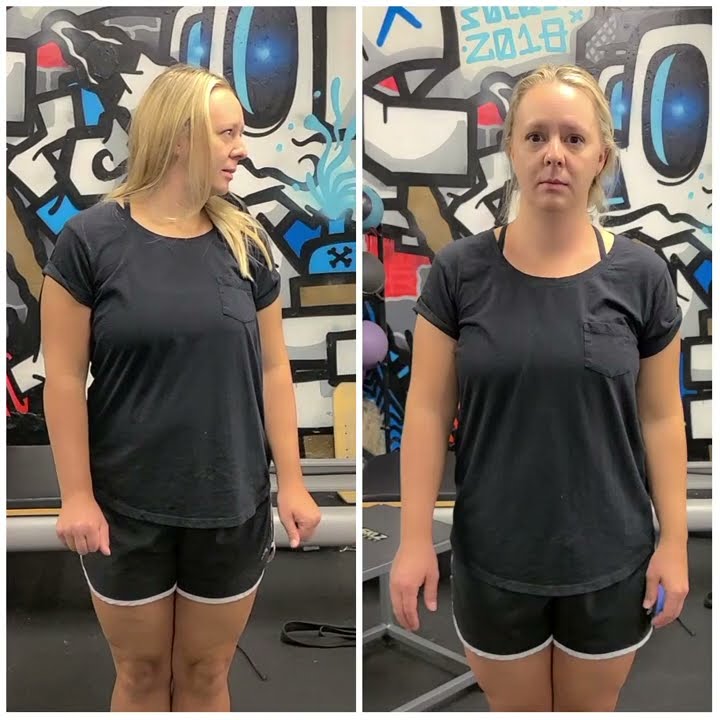 Play video: Client testimonial: Monique, 4 weeks of neck pain rated 7/10
 “I tried a new move in yoga. I woke up the next morning and couldn't move my neck”
— Danielle, 6 weeks of 7/10 neck painYour results may vary.
 Play video: Client testimonial: Danielle, 6 weeks of neck pain rated 7/10
 “After 3 years I didn't think anyone could help me fix my neck”
— Sandy, 3 years of 8/10 neck painYour results may vary.
 Play video: Client testimonial: Sandy, 3 years of neck pain rated 8/10
 “My office job means my neck is in constant pain, nothing seems to help”
— Natasha, 4 weeks of 7/10 neck painYour results may vary.
 Play video: Client testimonial: Natasha, 4 weeks of neck pain rated 7/10
 Why has the relief never lasted?
The maddening part was never the pain itself. It was Tuesday's relief being gone by Thursday. You don't need more relief. You need to stop needing it.
Massage, adjustment, dry needling, a new pillow. All of them are good at turning the volume down, and all of them aim at the spot that hurts. That is the symptom. It isn't what keeps producing it.
A neck that keeps flaring is almost never one angry muscle waiting to be switched on or dialed down. It's a web, and your neck is one strand of it:
- how much load your neck and shoulders can handle
- how long you hold a position before anything moves
- sleep, stress, and the weeks when both are bad at once
- the movements you stopped making months ago without noticing
- what you believe is going on in there
Pull on one strand and the web hands the pain straight back. That's not a failure of the treatments you tried. It's what happens when a single thread gets worked in isolation.
Is it my posture?
You've been told to sit up straight more times than you can count. You've tried it. It didn't hold. That isn't a discipline problem.
It's probably not your posture alone. The link between how you sit and how your neck feels is far weaker than you've been told, and plenty of people with textbook-bad posture have no pain at all.
What a neck objects to is staying in one position, not the position itself, and even that is only one strand. A neck with real strength behind it handles a long day at a desk. That part is trainable.
My scan showed degeneration.
Almost everyone your age has it, including people with no pain at all. It shows up on a scan the way gray hair shows up in a mirror.
Finding it doesn't tell us it's causing your pain, and it doesn't predict how well you'll do. If yours is one of the few presentations that needs a physician first, I'll tell you plainly.
What happens here?
First session, we work out what your neck responds to: what sets it off, what settles it, what you've stopped doing. Then we give those things back, alongside real strength work for the neck, upper back and shoulders.
I work the whole web, not the sore spot. Most people feel something shift in that first visit. That's the start, not the finish; holding onto it usually takes six to eight sessions.
Common questions
Do you crack or adjust necks?
No. Manipulation can feel good briefly, but it does not build the capacity that stops the pain returning. Everything here is active: movement, graded exposure and progressive strength work you can eventually do without me.
My neck pain comes with headaches. Can that be helped?
Often, yes. Headaches that originate from the neck usually improve as the neck desensitizes and gets stronger. I will also flag it if your headache pattern looks like something that needs a physician instead.
How many sessions will I need?
Most people land in the six to eight range. You will get a straight estimate after the first assessment, not an open-ended commitment.
Why can it change this fast?
Pain is produced by your nervous system, not simply reported by your tissues. When pain outlasts healing, what usually keeps it going is a protection response — guarding, avoiding certain movements, a system that has learned to read ordinary load as danger. That's a learned pattern, and patterns can shift quickly when you give the system genuinely new information. Fast change proves the pain is changeable. Making it hold is the work that follows, and for most people that's six to eight sessions.
Once the pain settles, what then?
A neck that no longer hurts at rest is not the same as a neck that tolerates a long ride, an overhead session, or a full week at a desk. Building that tolerance is strength training for the neck, upper back and shoulders, and it is the second half of the job. Most people keep it going here, once or twice a week.
Related to this
- The evidence-based approach most providers don’t know
What Cognitive Functional Therapy is, the Lancet RESTORE evidence behind it, and how it combines with Applied Functional Science in practice. One of a handful of practitioners in Colorado.
- A shoulder that rest hasn’t fixed
Rotator cuff pain, impingement and stiff shoulders that did not settle with rest or a cortisone shot. Graded loading and strength work in Denver.
Find out if this is your way out
A 30-minute assessment, $57: your story, my plain read on whether I can help, and one change you can measure before you leave.
Not in pain, just want to train hard without getting hurt? That's most of what I do →
Book a 30-minute assessmentOr call (720) 257-9328 · See how it works