
On 9NEWS · 2017
Dealing with soreness after a workout
Aired on 9NEWS, August 23, 2017. Reprinted with permission.
2026 note from Jamie
Two things I'd say differently. You don't need seven or eight out of ten pain for foam rolling to help: firm pressure you can still breathe through does the job. And the soreness you feel a day or two after training isn't lactic acid, which clears within an hour or so of finishing.
 Play video: Dealing with soreness after a workout (9NEWS)
Transcript
Host: We took Workout Wednesday out to Wash Park once again, and our fitness expert, Jamie Atlas from Bonza Bodies, is joining us. If you don't own a foam roller, get one. They're amazing and they can help with so much. And you have some moves.
Jamie: Yes. Such a valuable piece. Now, you've got the softer white roller; I have a harder black roller. If you go to most respectable stores, even Target will have some sort of foam roller you can use. The most important thing I tell people is to remember that the idea is not to put yourself in excruciating pain. Try and find a seven to eight out of ten level of pain. Not super pleasant, but it really will help.
Host: Oh no. So it's not relaxing, like a massage.
Jamie: No. What we're going to do is work our way up the body with four moves I really love, for people who have a foam roller. The first one is the calves. We spend so much time just sitting doing nothing, these calves rarely get the blood flushing.
Host: Get the blood flush.
Jamie: Yeah. So all I'm going to do is roll almost like a windscreen wiper: left to right, left to right. Right now all we're doing is using the weight of the calf on the roller. Sometimes you'll feel a little slip, a little move; that's okay. What we're trying to do is just get mobility and some relief through these muscles. A little extra bonus: put one leg on top of the other, like that, and all of a sudden you have twice the weight.
Host: It feels good. For those of you who have never foam rolled, you don't know how much pain we're in right now.
Jamie: Another popular one is the IT band, on the side right here. It gets really tight. Now, sometimes I'll tell clients, if you can't relax into it and it's too tight, you need something a little looser. So I'll get clients to find that spot. You'll notice Cory has the right leg forward, so she's got her weight on the left side, and she's going to move up and down, just an inch.
Host: So right on that.
Jamie: Right on that. You'll know it: it runs all the way from the side of the hip down to the side of the knee. So find a spot and move an inch back and forth. Sometimes you just find a good spot and stay there for a few seconds. Then, once you've spent about a minute or two there, move to the next spot.
Jamie: This next one is my secret weapon. Whenever clients have problems with back pain, stuff like that, this is the one. If you have back pain, this is what you need. And if you don't have a foam roller, just roll a towel up really tight; in a pinch it works great for my clients on the road. So we're going to be right here: hands behind, left knee up, and we're going to roll to the left. Good. Now bring the right foot a little closer to the butt. There we go. Good. And right here, find that spot. Yeah, I always know by the face, because I get that sort of grimace, where they're trying to smile.
Host: Like, I kind of hate you right now.
Jamie: Yes, it's right there. So I'm going to move an inch back and forth, just like that. Find that spot. And of course we'd go left, right, left, right. What I prefer to tell clients is: do a minute left, a minute right, a minute left, a minute right, rather than two minutes on one side.
Host: Okay. Good.
Jamie: Last one, which is amazing if you have any sort of job that requires you to live at a desk. Or, let's face it, most of us.
Host: We spend so much time right here, tapping away on our devices.
Jamie: So I'm going to reverse this rounded back position and arch it up. Sometimes you'll get a couple of pops, and that's okay. I'm going to put my arms back here and bring my elbows forward, so my shoulder blades get out of the way. Then, hips up, head down, I'm going to roll, and as I roll I'm trying to lift the shoulders, let the chest open, and then roll back down. All the movement is coming from the hamstrings, and right here I'm feeling the spine. It's so good; it's undoing the gravity that's happened all day. This is something you can do twice a day. It's an amazing movement for getting a body that can stand tall, free of pressure and free of stress.
Host: So good. Move that lactic acid and all that good stuff. We're going to put all the information on our website at 9news.com. Thank you.
Afterword, 2026
What the research says now: a 2019 meta-analysis by Wiewelhove and colleagues in Frontiers in Physiology found foam rolling after exercise reduced perceived muscle pain by about 6%, the biggest effect in the review. Its effects on performance and recovery overall were "rather minor and partly negligible."
So foam rolling is a nice way to feel a bit better after a session. It isn't treatment, and it doesn't need to hurt. If your back needs more than that, the back pain page below is the better place to start. Below that is Katrina, a client who came in with a month of back pain. One person's result, not a promise.
Katrina, 4 weeks of 6/10 back pain
An equestrian, four weeks in. Pain went from 6/10 to 0/10 in 50 minutes.
Results vary from person to person.
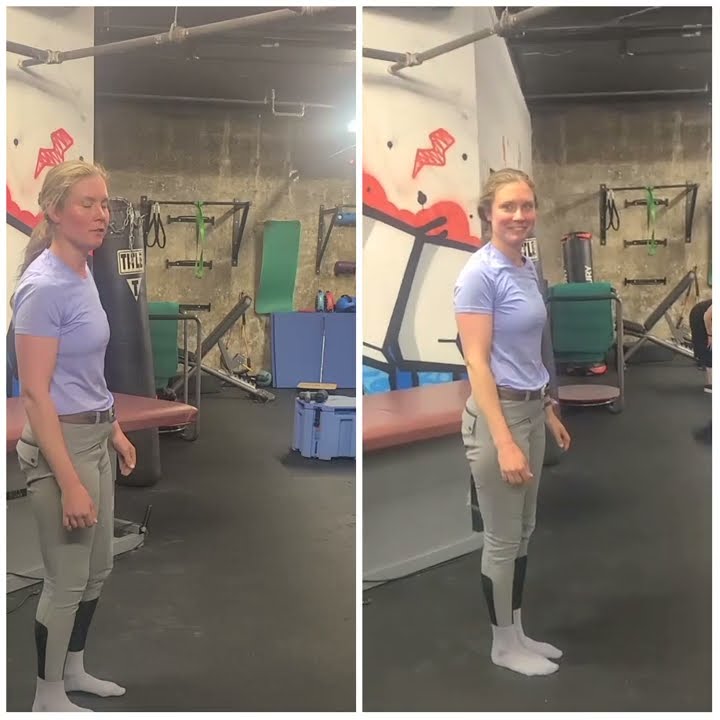 Play video: Client testimonial: Katrina, 4 weeks of back pain rated 6/10
Related
Want this built around your body?
A 30-minute assessment, $57: your history, my plain read on whether I can help, and one change you can measure before you leave.
Book a 30-minute assessmentOr call (720) 257-9328