
For runners
It's the same one every year, isn't it.
Same side. Roughly the same point in the build. And every year you file it under bad luck, or getting older, or that one hill. It is none of those. The single most robust risk factor in the entire running-injury literature — ahead of shoes, surface, gait and age — is having been injured before. Which sounds bleak for about four seconds and is actually the most useful sentence on this page.
“I picked up my daughter and my neck went numb”
— Monique, 4 weeks of 7/10 neck painYour results may vary.
 Play video: Client testimonial: Monique, 4 weeks of neck pain rated 7/10
 “I tried a new move in yoga. I woke up the next morning and couldn't move my neck”
— Danielle, 6 weeks of 7/10 neck painYour results may vary.
 Play video: Client testimonial: Danielle, 6 weeks of neck pain rated 7/10
 “After 3 years I didn't think anyone could help me fix my neck”
— Sandy, 3 years of 8/10 neck painYour results may vary.
 Play video: Client testimonial: Sandy, 3 years of neck pain rated 8/10
 “My office job means my neck is in constant pain, nothing seems to help”
— Natasha, 4 weeks of 7/10 neck painYour results may vary.
 Play video: Client testimonial: Natasha, 4 weeks of neck pain rated 7/10
 “It's too hard to get in shape when I've had knee pain ever since I can remember”
— Cindy, a lifetime of 6/10 knee painYour results may vary.
 Play video: Client testimonial: Cindy, a lifetime of knee pain rated 6/10
 “I tore my ACL in an MMA match and haven't been able to train since”
— Meghan, 4/10 knee pain after an ACL tearYour results may vary.
 Play video: Client testimonial: Meghan, knee pain after an ACL tear, 4 out of 10 down to 0
 “After my fall my knee was in pain and I couldn't stand on one leg”
— Brad, 6 months of 6/10 knee painYour results may vary.
 Play video: Client testimonial: Brad, 6 months of knee pain rated 6/10
 “I got surgery on my shoulder 2 years ago and have been getting rolfing and PT”
— Samantha, 5 years of 7/10 shoulder painYour results may vary.
 Play video: Client testimonial: Samantha, 5 years of shoulder pain rated 7/10
 “My shoulder numbness and tingling was so bad I drove 2 hours to see Jamie Atlas”
— Heather, 6 weeks of 10/10 shoulder nerve painYour results may vary.
 Play video: Client testimonial: Heather, 6 weeks of shoulder nerve pain rated 10/10
 “I've been in physical therapy for 6 months and I'm stalled on my results”
— Judy, 6 months of 10/10 shoulder painYour results may vary.
 Play video: Client testimonial: Judy, 6 months of shoulder pain rated 10/10
 “My shoulder pain meant I couldn't take my shirt on or off without hurting”
— Sharon, 4 months of 6/10 shoulder painYour results may vary.
 Play video: Client testimonial: Sharon, 4 months of shoulder pain rated 6/10
 “3 surgeries over 10 years and I still can't get my shoulder above my head”
— Clay, 10 years of 7/10 shoulder painYour results may vary.
 Play video: Client testimonial: Clay, 10 years of shoulder pain rated 7/10
 “Taking my dog for a walk he pulled on my shoulder and now it hurts to move”
— Kendall, 2 weeks of 6/10 shoulder painYour results may vary.
 Play video: Client testimonial: Kendall, 2 weeks of shoulder pain rated 6/10
 “I was squatting at the gym when I felt a pop and my leg went numb”
— Kelly, 12 months of 8/10 back painYour results may vary.
 Play video: Client testimonial: Kelly, 12 months of back pain rated 8/10
 “After the car accident the hospital said I was fine but my back pain says otherwise”
— Dax, 5 days of 10/10 back painYour results may vary.
 Play video: Client testimonial: Dax, 5 days of back pain rated 10/10
 “Playing football has left me with constant back pain that I can't get rid of”
— Matthew, 7 weeks of 7/10 back painYour results may vary.
 Play video: Client testimonial: Matthew, 7 weeks of back pain rated 7/10
 “I went to Pilates to fix my back but it ended up making it worse”
— Colleen, 8 weeks of 7/10 back painYour results may vary.
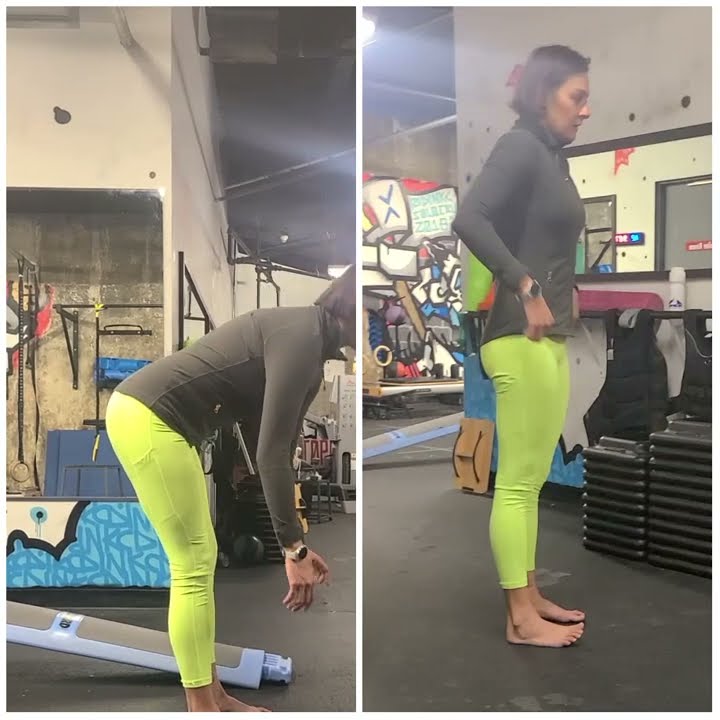 Play video: Client testimonial: Colleen, 8 weeks of back pain rated 7/10
 “I was thrown from a horse and couldn't bend over without pain”
— Katrina, 4 weeks of 6/10 back painYour results may vary.
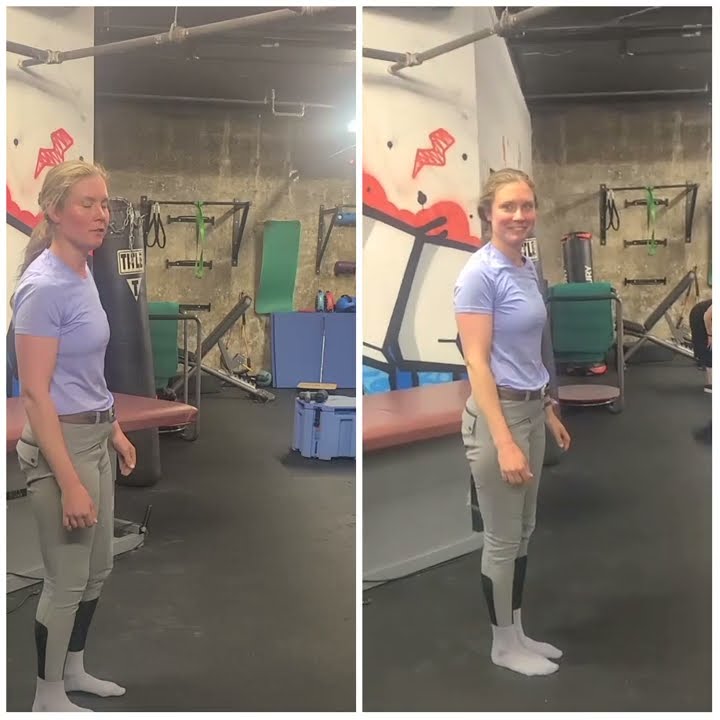 Play video: Client testimonial: Katrina, 4 weeks of back pain rated 6/10
 “This 9/10 back pain is stopping me from sleeping at night”
— Alexis, 2 months of 10/10 back painYour results may vary.
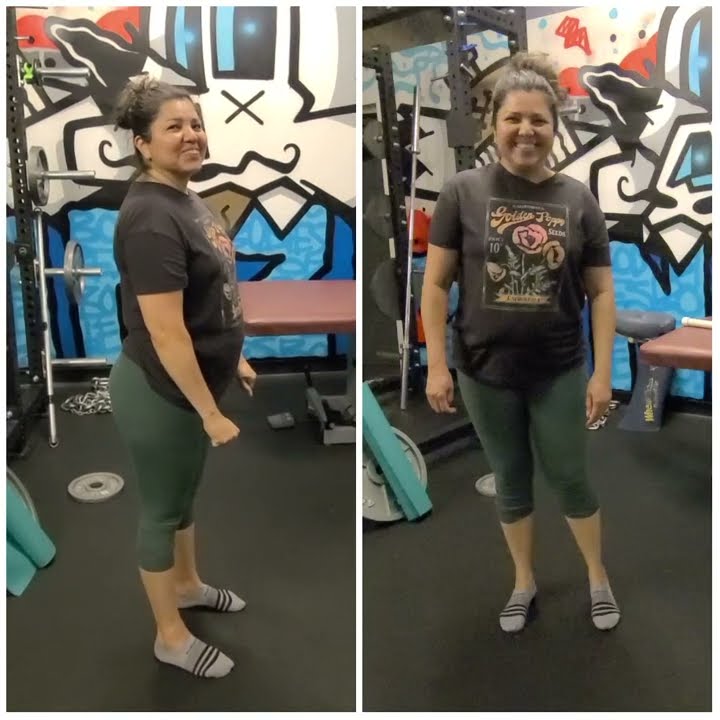 Play video: Client testimonial: Alexis, 2 months of back pain rated 10/10
 “My back pain is so bad I can't put on my shoes”
— Penelope, 5 weeks of 7/10 back painYour results may vary.
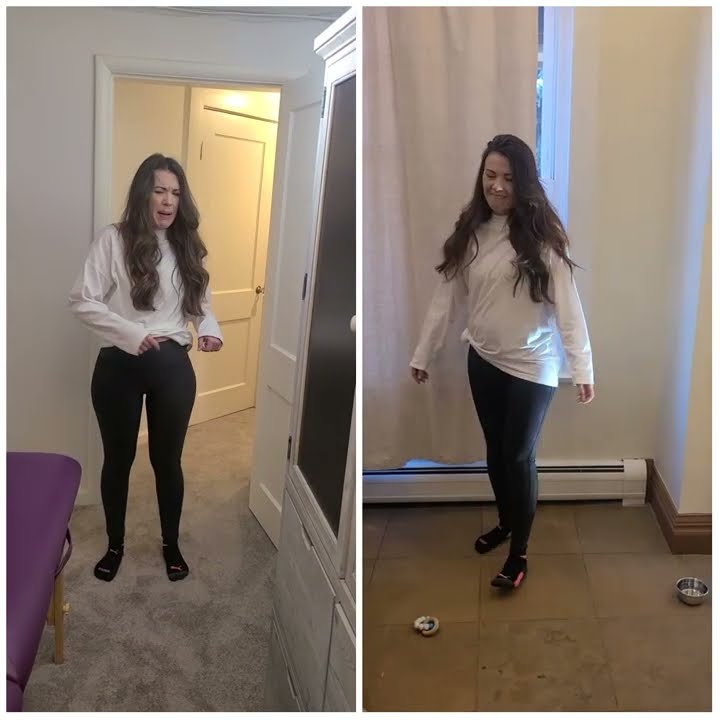 Play video: Client testimonial: Penelope, 5 weeks of back pain rated 7/10
 “Living with back pain has me living at a 7/10 pain that I can't find relief from”
— Chris, 8 weeks of 7/10 back painYour results may vary.
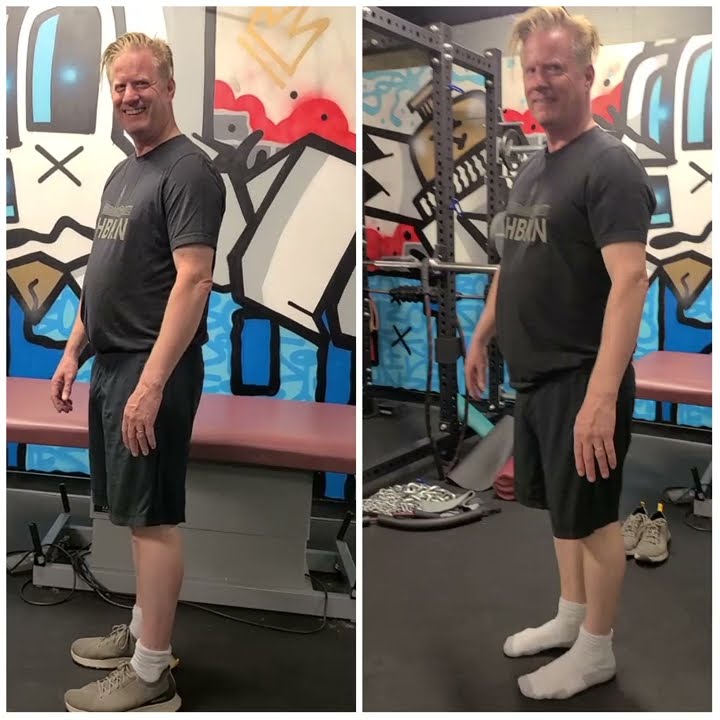 Play video: Client testimonial: Chris, 8 weeks of back pain rated 7/10
 “I have a herniated L4/L5 and my sciatic pain feels like a screwdriver in my back”
— Kendra, 2 years of shooting sciatic painYour results may vary.
 Play video: Client testimonial: Kendra, two years of shooting sciatic pain resolved
 “The doctor told me my spondylolisthesis back pain could only be cured with surgery”
— Tony, 2 weeks of lightning-bolt back painYour results may vary.
 Play video: Client testimonial: Tony, two weeks of severe back pain down to 1 out of 10
 Which of these is you?
It's flared again and you're already annoyed. You know the drill. Two weeks off, a cautious return, and a countdown to the next one. Start here.
You've been cleared and you don't trust the leg. The physio ended, the notes said fine, and you still run the first mile listening to it. The gap between cleared and ready.
You've got a race and you're building. And you'd like this to be the year the build actually finishes. Training up without paying for it.
A pattern waiting, and a spike to meet it
Recurring running injuries are two things arriving at the same time. There's something in how you're built or how you load — usually unremarkable, usually not painful on its own. And then there's a week where the volume, the pace or the terrain steps up. Neither is a problem. Together, every season, they are the same problem.
The load half has been measured properly and recently. In 2025 a group published data on 5,205 runners across 588,071 individual running sessions, asking a very specific question: what happens when a single run is longer than anything you've done in the past month? More than doubling your longest recent run carried more than twice the injury hazard.
Read what that actually measures. Not your weekly mileage. Not your monthly total. One run, against your own recent history. Which is why the spring Saturday and the last long run before a race are both such reliable sources of business for people like me.
And while we're here — the ten per cent rule. Everybody's rule. I have said it out loud to people, with a straight face, more times than I want to count. It's been tested. Five hundred and thirty-two novice runners randomised to a thirteen-week graded programme built on it, against a standard eight-week one. Injuries: 20.8 per cent versus 20.3 per cent.
A second trial, eight hundred and thirty-nine runners, compared building volume against building intensity. No difference there either.
So both of these are true at once, and anyone telling you otherwise has read one of them: big single jumps look genuinely risky, and no tidy weekly rule for avoiding them has ever been shown to work.
There's a related argument worth knowing about — the Garmin-RUNSAFE group have argued that overuse running injuries often don't accumulate gradually at all, but appear suddenly, frequently inside a single session. That one is their position rather than settled consensus, but it matches what walks through my door with unhelpful regularity.
What actually helps, and what only sounds like it does
Strength training. Across sports, a meta-analysis of randomised trials found strength training reduced injury risk to roughly a third of the control rate, with a dose-response relationship. That's across sports rather than runners specifically, and I'll say so rather than quietly upgrading it — but it is by a distance the best-evidenced thing on this list, and it is the thing runners skip.
Cadence, honestly. Increasing step rate by five per cent reduces the energy absorbed at the knee by around twenty per cent; ten per cent takes it to about a third. That mechanism is well established. Whether it prevents injury is a much weaker claim — the best review found only two trials reporting reduced injury incidence. So: a good tool for a knee that's being asked too much, not a magic setting.
And the downhills. Braking is where the muscle damage actually comes from, and prior exposure is protective — the people who take the most damage from a descent are consistently the ones least used to descending. In Denver, where the spring transition tends to add distance, hills, terrain and altitude all on one Saturday, that matters more than it does most places. The longer version of that argument is on the hikers page.
Two things I'd gently steer you away from spending money on first: your running surface, which the systematic reviews have never established as a risk factor at all, and the acute-to-chronic workload ratio, which was heavily promoted for years and has since been fairly comprehensively taken apart.
Building blocks live in return to running, the glute work and balance and control. And if your winter was spent indoors, the treadmill piece covers what actually catches people in March — including the bit where I take back what I wrote about treadmills in 2008.
Two people who came in with this — and neither of them runs
I'm not going to pretend otherwise. Kendra plays volleyball and Brad is a hiker, and if you'd rather see a runner on camera before you trust a word of this, that's a completely reasonable position and I don't have one for you yet. What they do have is the two problems runners arrive with most often: something shooting down the leg, and a knee that gave up on the descent.
Kendra, 2 years of shooting sciatic pain
A volleyball player, two years of shooting sciatic pain. Down to 0/10 in 20 minutes.
Your results may vary.
Play video: Client testimonial: Kendra, two years of shooting sciatic pain resolved Brad, 6 months of 6/10 knee pain
A hiker who'd had it for six months. Pain went from 6/10 to 1/10 in 50 minutes.
Your results may vary.
Play video: Client testimonial: Brad, 6 months of knee pain rated 6/10 All client videos · results vary from person to person.
What working together actually looks like
A 60-minute assessment first: the injury history in detail — and with a recurring one, the history is the diagnosis — what your training actually looked like in the four weeks before each flare, and then testing what the leg tolerates under single-leg load, under braking, and repeatedly rather than once.
Then one-on-one sessions of 45 to 60 minutes with me at the studio at 1800 Glenarm Place downtown. Mostly strength, mostly single leg, progressed against what your tissue accepts rather than against a calendar — alongside a plan for how the running itself gets rebuilt, because the running is the point and I have no interest in you doing rehab instead of it.
If what you've got needs a physician before it needs me — and some presentations do — I'll say so in the first half hour.
Common questions
Why do I get the same running injury every year?
Because the thing that produced it the first time was never addressed, and every season you arrive back at the same load with the same pattern waiting. The most robust risk factor in the entire running-injury literature is not your shoes, your surface or your gait — it is previous injury. That is genuinely good news, because it means the recurring one is the most predictable problem you have. What it needs is not more rest. It is finding what the tissue actually tolerates and building it past the point where your usual season demands it.
How fast should I build mileage after time off?
More slowly than feels necessary, and with far more attention to single sessions than to weekly totals. In a study of 5,205 runners across 588,071 sessions, the injury hazard rose when a single run exceeded the longest run of the previous 30 days — more than doubling that longest run carried more than twice the hazard. Note what that measures: one run, against your recent history. It is worth adding that the famous ten per cent per week rule has actually been tested in a randomised trial of 532 novice runners and it made no difference at all — 20.8 per cent injured versus 20.3 per cent. Avoiding big single jumps is well supported. No specific weekly rule has ever been shown to work.
Is it safe to run through knee pain?
It depends entirely on what the pain is doing rather than on whether it is there. Pain that appears late in a run, settles within a day and is not getting worse week on week is a different situation from pain that arrives earlier each time, lingers longer, or has started changing how you land. The second pattern is the one to stop and get assessed, and the useful question is never simply whether it hurts — it is whether the trend across three weeks is going the right way. If you cannot tell, that is exactly what an assessment is for.
So it isn't bad luck, it isn't your age, and it wasn't that hill. It's a pattern that has been there the whole time, meeting a week where you asked for more — and the fact that it's the same one every year is the strongest evidence you have that it's predictable.
Anyway. You know it now. Which is going to make next February's build quite a bit harder to be casual about.
Or you could find out what it actually is.
A 30-minute assessment, $57: your history, my plain read on whether I can help, and one change you can measure before you leave.
Not in pain, just want to train hard without getting hurt? That's most of what I do →
Book a 30-minute assessmentOr call (720) 257-9328 · Knee pain · Masters athlete injuries