
Resources · Footwear
I wrote fifteen hundred words about high heels in 2008. The central mechanism doesn't hold up.
It was, for a while, the thing I was best known for. I sent it to people. I said it on camera. And the bit everybody remembers — the chain that runs heel to pelvis to arched lower back — has been tested properly since, and it does not do what I said it does.
“I picked up my daughter and my neck went numb”
— Monique, 4 weeks of 7/10 neck painYour results may vary.
 Play video: Client testimonial: Monique, 4 weeks of neck pain rated 7/10
 “I tried a new move in yoga. I woke up the next morning and couldn't move my neck”
— Danielle, 6 weeks of 7/10 neck painYour results may vary.
 Play video: Client testimonial: Danielle, 6 weeks of neck pain rated 7/10
 “After 3 years I didn't think anyone could help me fix my neck”
— Sandy, 3 years of 8/10 neck painYour results may vary.
 Play video: Client testimonial: Sandy, 3 years of neck pain rated 8/10
 “My office job means my neck is in constant pain, nothing seems to help”
— Natasha, 4 weeks of 7/10 neck painYour results may vary.
 Play video: Client testimonial: Natasha, 4 weeks of neck pain rated 7/10
 “It's too hard to get in shape when I've had knee pain ever since I can remember”
— Cindy, a lifetime of 6/10 knee painYour results may vary.
 Play video: Client testimonial: Cindy, a lifetime of knee pain rated 6/10
 “I tore my ACL in an MMA match and haven't been able to train since”
— Meghan, 4/10 knee pain after an ACL tearYour results may vary.
 Play video: Client testimonial: Meghan, knee pain after an ACL tear, 4 out of 10 down to 0
 “After my fall my knee was in pain and I couldn't stand on one leg”
— Brad, 6 months of 6/10 knee painYour results may vary.
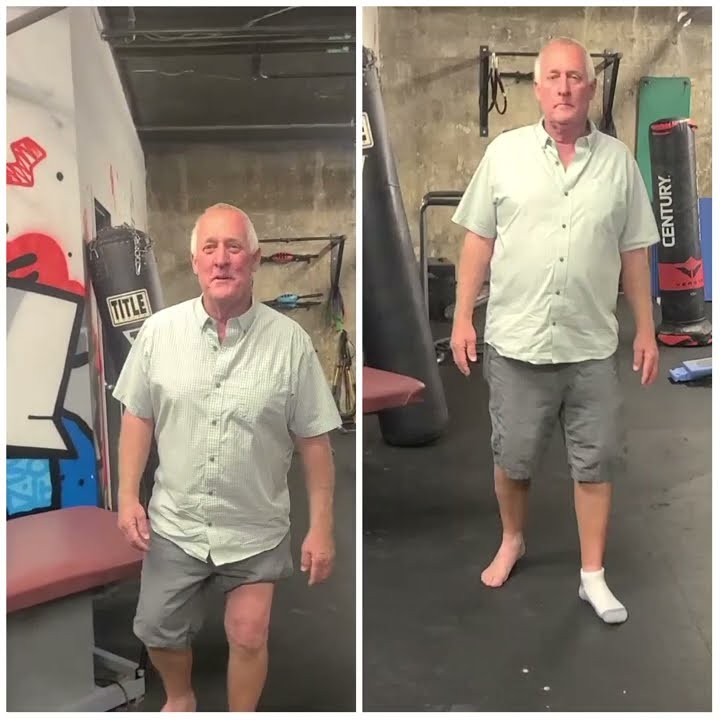 Play video: Client testimonial: Brad, 6 months of knee pain rated 6/10
 “I got surgery on my shoulder 2 years ago and have been getting rolfing and PT”
— Samantha, 5 years of 7/10 shoulder painYour results may vary.
 Play video: Client testimonial: Samantha, 5 years of shoulder pain rated 7/10
 “My shoulder numbness and tingling was so bad I drove 2 hours to see Jamie Atlas”
— Heather, 6 weeks of 10/10 shoulder nerve painYour results may vary.
 Play video: Client testimonial: Heather, 6 weeks of shoulder nerve pain rated 10/10
 “I've been in physical therapy for 6 months and I'm stalled on my results”
— Judy, 6 months of 10/10 shoulder painYour results may vary.
 Play video: Client testimonial: Judy, 6 months of shoulder pain rated 10/10
 “My shoulder pain meant I couldn't take my shirt on or off without hurting”
— Sharon, 4 months of 6/10 shoulder painYour results may vary.
 Play video: Client testimonial: Sharon, 4 months of shoulder pain rated 6/10
 “3 surgeries over 10 years and I still can't get my shoulder above my head”
— Clay, 10 years of 7/10 shoulder painYour results may vary.
 Play video: Client testimonial: Clay, 10 years of shoulder pain rated 7/10
 “Taking my dog for a walk he pulled on my shoulder and now it hurts to move”
— Kendall, 2 weeks of 6/10 shoulder painYour results may vary.
 Play video: Client testimonial: Kendall, 2 weeks of shoulder pain rated 6/10
 “I was squatting at the gym when I felt a pop and my leg went numb”
— Kelly, 12 months of 8/10 back painYour results may vary.
 Play video: Client testimonial: Kelly, 12 months of back pain rated 8/10
 “After the car accident the hospital said I was fine but my back pain says otherwise”
— Dax, 5 days of 10/10 back painYour results may vary.
 Play video: Client testimonial: Dax, 5 days of back pain rated 10/10
 “Playing football has left me with constant back pain that I can't get rid of”
— Matthew, 7 weeks of 7/10 back painYour results may vary.
 Play video: Client testimonial: Matthew, 7 weeks of back pain rated 7/10
 “I went to Pilates to fix my back but it ended up making it worse”
— Colleen, 8 weeks of 7/10 back painYour results may vary.
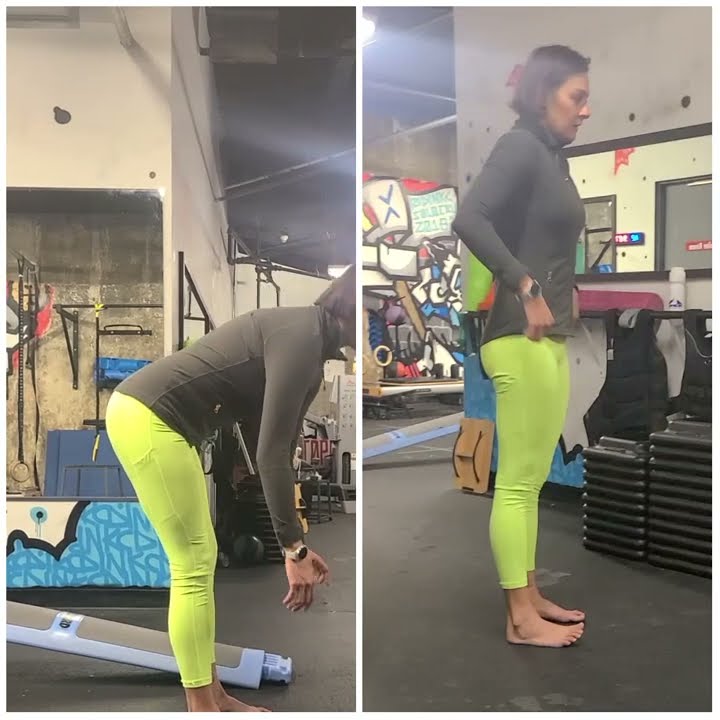 Play video: Client testimonial: Colleen, 8 weeks of back pain rated 7/10
 “I was thrown from a horse and couldn't bend over without pain”
— Katrina, 4 weeks of 6/10 back painYour results may vary.
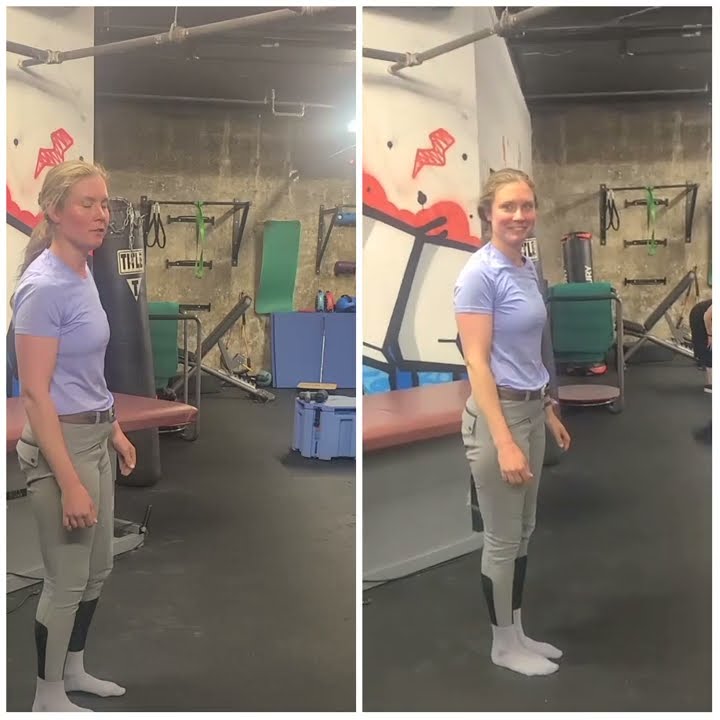 Play video: Client testimonial: Katrina, 4 weeks of back pain rated 6/10
 “This 9/10 back pain is stopping me from sleeping at night”
— Alexis, 2 months of 10/10 back painYour results may vary.
 Play video: Client testimonial: Alexis, 2 months of back pain rated 10/10
 “My back pain is so bad I can't put on my shoes”
— Penelope, 5 weeks of 7/10 back painYour results may vary.
 Play video: Client testimonial: Penelope, 5 weeks of back pain rated 7/10
 “Living with back pain has me living at a 7/10 pain that I can't find relief from”
— Chris, 8 weeks of 7/10 back painYour results may vary.
 Play video: Client testimonial: Chris, 8 weeks of back pain rated 7/10
 “I have a herniated L4/L5 and my sciatic pain feels like a screwdriver in my back”
— Kendra, 2 years of shooting sciatic painYour results may vary.
 Play video: Client testimonial: Kendra, two years of shooting sciatic pain resolved
 “The doctor told me my spondylolisthesis back pain could only be cured with surgery”
— Tony, 2 weeks of lightning-bolt back painYour results may vary.
 Play video: Client testimonial: Tony, two weeks of severe back pain down to 1 out of 10
 Not the whole piece. The parts about the ankle have aged rather well, and I'll come back to those, because they turn out to be the interesting half.
In my defence, and it is a thin defence, I was repeating what the field was repeating. That's how most of these things travel: somebody draws a plausible mechanism, it's easy to explain, it fits on a napkin, and it gets handed down for thirty years without anyone going back to check.
I didn't check either. I had a diagram and a lot of confidence.
So — corrections first, then the part that survived.
Correction: the arch in your lower back
The story goes like this, and you've heard it, because everyone has. Heel goes up. Pelvis tips forward. Lower back arches harder to compensate. Hence back pain.
It is a beautiful mechanism. You can draw it on a napkin. I have drawn it on a napkin.
In 2017 a group in Zurich put forty women through it with proper measurement — barefoot, four centimetres, ten centimetres — and found lumbar curvature went down, not up.
The following year a German group tested it again in women wearing heels of seven to eleven centimetres and reported, in about as flat a sentence as you'll find in a biomechanics journal, that their hypothesis of increased lumbar lordosis "had to be rejected for standing as well as for walking." What moved was the pelvis, by roughly one degree — and it moved backwards.
And it turns out somebody noticed this a while ago. In 2010 a researcher went through the literature and found three studies showing lordosis decreased, three showing no change, and three showing an increase — with all three of the increase studies having something wrong with them. He then wrote a paper whose subtitle is, and I want you to appreciate this, "a discussion of the disconnect between Internet content and peer-reviewed literature."
I was the internet content.
One caution while I'm correcting myself, so I don't simply install a new dogma: the honest position is not "heels flatten your back." It's that the popular increase claim isn't supported, and studies find either no change or a decrease. The author of that review called the literature equivocal, and he was right.
Correction: the knee, and what the famous numbers actually measured
This one is subtler and I nearly got it wrong a second time.
There are two well-known studies, both small, both in The Lancet, both twenty healthy women in a gait lab. The 1998 one found that walking in heels produced greater force across the kneecap joint and greater compressive force on the inner compartment of the knee — on average 23 per cent greater than barefoot. The 2001 follow-up found wide-heeled and narrow-heeled shoes increased peak knee varus torque by 26 and 22 per cent respectively.
Those are two different measurements, and half the internet — including, until recently, my own notes — reports the 23 per cent as if it were the varus torque figure. It isn't. Related quantities, not the same one.
So the loading changes. That much is measured and real.
What has not been shown is that it turns into arthritis. In 2021 researchers followed 356 women, median age 60, for five years. Ever wearing heels of two inches or more was not associated with developing radiographic knee osteoarthritis, nor with developing joint symptoms — and increasing cumulative lifetime hours in heels showed nothing either. A systematic review found two studies that looked at osteoarthritis and neither found a significant association.
The researchers who measured the forces were careful about this in a way the retellings were not. Their wording was that the altered forces "may predispose to degenerative changes." Mine, in 2008, was rather more confident than that.
And one I'd have got wrong if I'd trusted the obvious answer
Bunions. Obviously the heels, right?
The largest study of its kind — 2,627 women aged 50 to 89 — found hallux valgus associated with narrow and very narrow toe boxes worn in a woman's twenties and thirties. The odds roughly doubled. And it found no association with heel height at either age period.
It is the shape of the front of the shoe, not the height of the back of it, that the best evidence points at. Heels and narrow toe boxes are almost perfectly confounded in real footwear, which is exactly why everyone blamed the visible half.
What actually holds up — and it's the useful part
Here's the bit I'd keep, and it's not the bit anyone ever quoted.
Put your heel up and your ankle spends the whole day near the end of its range. Women who wear heels most days measure with significantly less dorsiflexion — less ability to bring the shin forward over the foot. And the ankle is your first shock absorber and your main push-off engine.
Take that away and the work doesn't vanish. It moves. Measured directly: less power from the ankle at push-off, more from the knee extensors in mid-stance and more from the hip. A 2025 meta-analysis of nineteen studies found muscle activity through the leg and trunk rises with heel height in a clean dose gradient — low heels a small effect, medium moderate, high large.
And here's the counter-intuitive part that kills the popular version of this story: ground reaction forces are lower in heels, not higher. Meta-analysis, both peaks, unambiguous.
So this was never about pounding. It's about which structures are doing the job.
Which is the same argument I've been making since 2008, about everything: the place that's working hardest is often not the place that hurts, and the place that hurts is often the one that got handed a job it wasn't built for.
I just attached it to the wrong joint, and then said it with a diagram.
What I'd actually say now
Nothing here is an argument for throwing out your shoes, and I notice that 2008 me spent several hundred words being fairly smug at women who weren't going to. That was neither useful nor particularly attractive, and I'd like it struck from the record.
What I'd say instead:
Duration matters more than height. In fifty habitual wearers over a six-hour day, back discomfort appeared first at around two and a quarter hours and general discomfort by about three and a half. Below about seven and a half centimetres, reported pain stayed under one out of ten. One study, young women, so hold it loosely — but "how long" is clearly doing more work than the industry's obsession with "how high."
Look at the toe box. That's where the best foot evidence actually points, and almost nobody shops for it.
If flats feel wrong, that's information, not damage. Reduce height gradually and give the calf and ankle some real work. The structural studies that found shortened calf fascicles studied women wearing heels essentially all working hours, for years — not occasional wear.
And if the ankle has genuinely lost range, that is assessable and often changeable, which is the one part of this whole subject where somebody like me is any use at all.
Common questions
Do high heels cause back pain?
Not established, and the mechanism usually offered as the explanation has not held up. What is supported is narrower: high-heel wearing is associated with musculoskeletal pain generally, and in a study of fifty habitual wearers over a six-hour day, back discomfort was the first thing to appear and the most reported. That is transient discomfort during wear. A five-year prospective study of 356 women, median age 60, found that ever wearing heels of two inches or more was not associated with developing joint symptoms — and cumulative lifetime hours showed nothing either.
Will heels give me arthritis in my knees?
The honest answer is that nobody has shown it. Heels do change how the knee is loaded — that part is measured and real. But the 356-woman five-year study found no association with developing radiographic knee osteoarthritis, a systematic review found two studies looking at osteoarthritis and neither found a significant association, and a review of reviews described osteoarthritis as not yet evidenced by epidemiological studies. Changed loading is not the same thing as disease, and the researchers who measured the loading said only that it may predispose.
Why do flat shoes feel horrible after years in heels?
Because the tissue adapted to what it was asked to do. Women who habitually wear heels have been measured with calf muscle fascicles around eleven per cent shorter and a stiffer Achilles tendon than women who mostly wear flats — so the same flat-footed step puts more stretch through the calf. Worth saying clearly: that is adaptation, not damage. In the one prospective study to induce the same change deliberately, participants also became more metabolically economical walkers. A gradual reduction in heel height alongside calf work is the sensible approach, though there is no trial telling anyone the best way to do it.
So the arched-back story doesn't survive testing, the arthritis story was never demonstrated, the bunions are about the front of the shoe, and the thing that actually changes is an ankle that stops absorbing and a knee and hip that pick up the difference.
Which is a smaller, quieter claim than the one I made in 2008. It also has the advantage of being what the measurements say.
Anyway. You know it now. And you're going to think about your toe box in a shoe shop for the rest of your life, which I'm afraid is on me.
If something has actually started hurting
A 30-minute assessment, $57: your history, my plain read on whether I can help, and one change you can measure before you leave.
Book a 30-minute assessmentOr call (720) 257-9328 · Knee pain · Chronic back pain