Jamie Atlas Personal Training & Rehabilitation, Denver
Click here to book your first session

Resources · Back pain

What exercises help lower back pain? (Fewer magic moves than you'd think)

In short: exercise helps most lower back pain that hangs around, and no single type has been shown to beat the others. Start with five simple ones, walking, a hip hinge, a bridge, a carry and a gentle rotation, and judge every one by how your back feels the next morning.

Back pain is the most common reason people book in with me. Here's where I start, and why I stopped hunting for the perfect exercise.

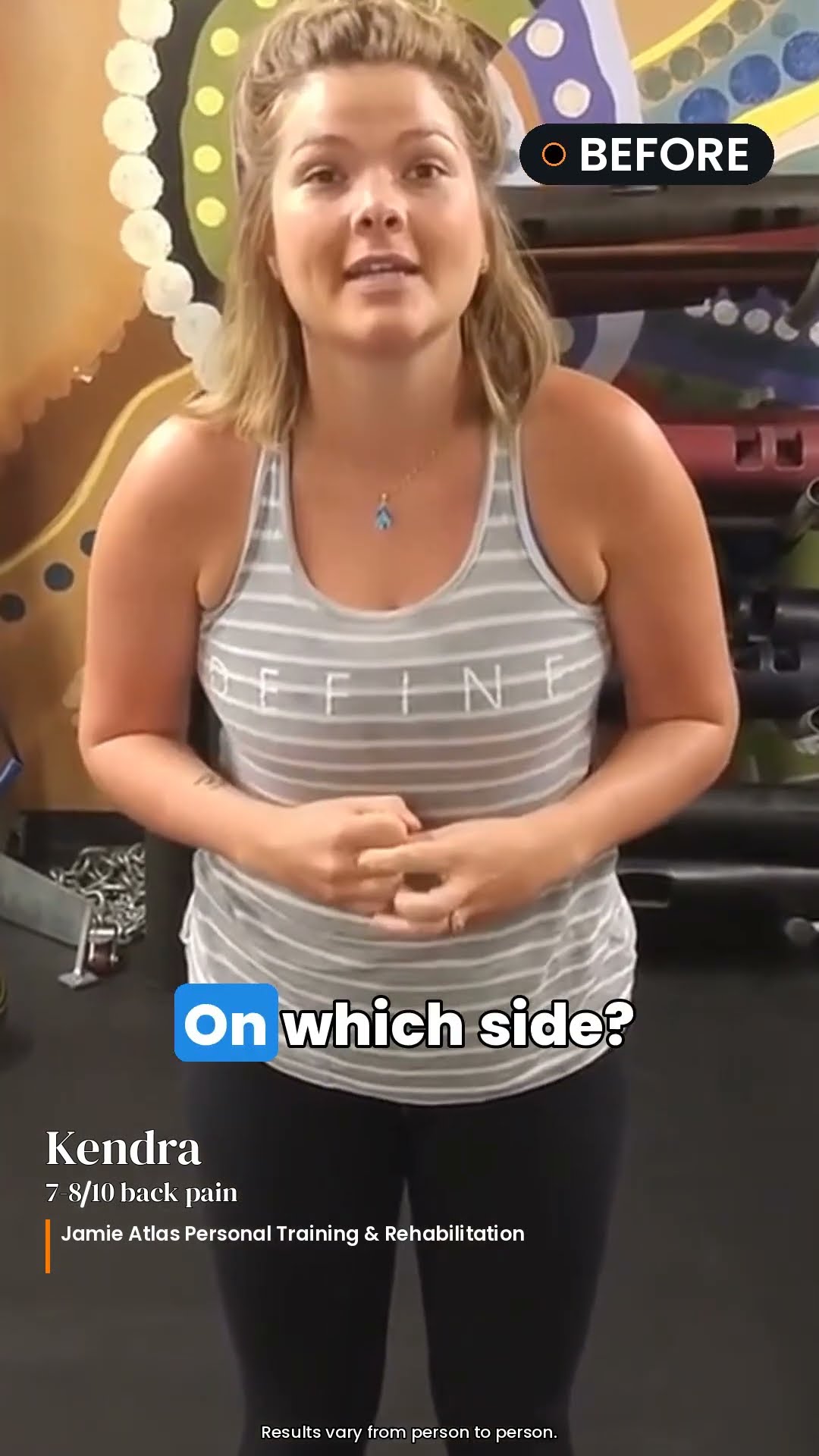
Chris Went From 7/10 to a Full Toe-Touch in About 50 Minutes

Results vary from person to person.

Back Pain Relief in Denver: Chris Went From 7/10 to a Full Toe-Touch in About 50 Minutes Play video: Back Pain Relief in Denver: Chris Went From 7/10 to a Full Toe-Touch in About 50 Minutes
1 / 6

What the research says

A Cochrane review pooled 249 trials of exercise for chronic low back pain. Exercise probably reduces pain compared with no treatment or usual care (Hayden and colleagues, 2021). The catch is that the average effect is modest, and no one style, Pilates, yoga, core work or strength training, has clearly beaten the rest. Back pain guidelines put exercise first for the same reason (NICE guideline NG59, 2016).

That's freeing. It means the best exercise for your back is the one you'll do three times a week and can gradually load up.

Five to start with

1. Walking

Ten to twenty minutes most days, at a pace where your back feels the same or better. It's the least glamorous exercise on this list and often the most useful.

2. Hip hinge with a dowel

Hold a broomstick along your back, touching your head, upper back and tailbone. Push your hips back, knees soft, until you feel your hamstrings, then stand. Ten slow reps. This teaches your back that bending is allowed.

3. Glute bridge

Lie on your back, knees bent, feet flat. Push through your heels and lift your hips, hold two seconds, lower. Ten to fifteen reps.

4. Suitcase carry

Hold a heavy bag or kettlebell in one hand and walk 20 to 30 steps tall, without leaning. Swap hands. It trains your trunk the way life uses it: holding you up while something pulls you sideways.

5. Open book

Lie on your side, knees bent, arms out in front. Open the top arm across your body toward the floor behind you, following it with your eyes, then return. Eight each side. Gentle rotation for a back that's been braced for weeks.

The rule: same or better afterwards, same or better the next morning. If it's worse the next morning, the dose was too big. Keep the exercise and do less of it.

We protected backs into weakness, me included

For a long time the advice for a sore back was to brace, avoid bending and skip the lifting. Most of my industry taught it. Isn't it a bit ridiculous that we tried to fix a back that hated load by never loading it?

A back that's spared gets weaker, and a nervous system told the back is fragile starts treating ordinary movement as a threat. Gradual loading reverses both. That's why every program I write for a back eventually includes lifting things off the floor.

When to see a doctor first

  • Numbness around the groin or buttocks, or new bladder or bowel trouble
  • A leg that's getting weaker
  • Pain after a fall or accident
  • Back pain with fever, unexplained weight loss or a history of cancer
  • Pain that's severe at night and doesn't change with position

If the pain runs down your leg, start with exercises for sciatica instead.

What people with back pain ask me

What exercises help with lower back pain?

Walking, hip hinges, glute bridges, loaded carries and gentle rotation are a good start. Research shows exercise helps chronic back pain, and no single type clearly beats the others, so pick ones you can do regularly and build up.

How often should I exercise for back pain?

Two or three strength sessions a week plus walking most days is a sensible start. Judge the dose by how your back feels the next morning.

What exercises should I avoid with lower back pain?

Nothing is banned for good, but early on skip anything that makes the pain worse the next morning or sends it down your leg. Sit-ups and hard stretching are rarely the best place to start.

Is walking good for lower back pain?

For most people, yes. Short regular walks at a comfortable pace are one of the easiest ways to keep a sore back moving.

So stop asking which exercise is the magic one. Ask which one you'll do on Tuesday, Thursday and Saturday, and how you'll make it a bit harder next month.

Once you've watched a back get calmer as it gets stronger, you won't go looking for the perfect stretch again.

Yours in health,
Jamie Atlas

PS Training in Denver: personal training for back pain. On a GLP-1? Back pain on a GLP-1.

Back still running your week?

A 30-minute assessment session, $57, in the studio or on Zoom. I find what your back will accept today and build from there.

Book me in for my first session now

Or call (303) 625-9446 · 1800 Glenarm Place, downtown Denver