
Resources · Running
Seventeen years ago I wrote "never run on a treadmill again." The central argument was wrong.
Not "a bit strong." Not "we've learned more since." Wrong, in the specific way where the physics disagreed with me the entire time and had been sitting in print since 1980 — a year in which I was seven years old and had, in my defence, considerably more pressing news to process, because that was the year the rest of us found out about Luke's father.
“I picked up my daughter and my neck went numb”
— Monique, 4 weeks of 7/10 neck painYour results may vary.
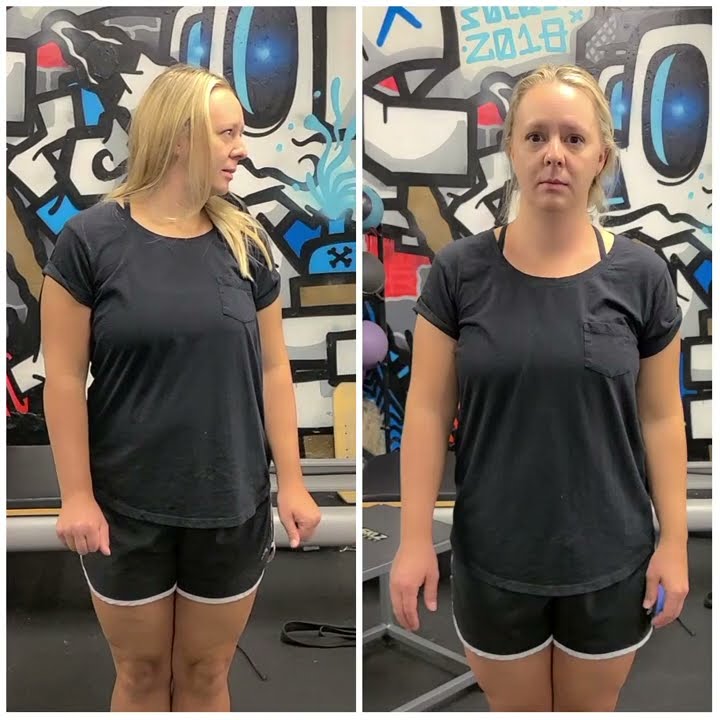 Play video: Client testimonial: Monique, 4 weeks of neck pain rated 7/10
 “I tried a new move in yoga. I woke up the next morning and couldn't move my neck”
— Danielle, 6 weeks of 7/10 neck painYour results may vary.
 Play video: Client testimonial: Danielle, 6 weeks of neck pain rated 7/10
 “After 3 years I didn't think anyone could help me fix my neck”
— Sandy, 3 years of 8/10 neck painYour results may vary.
 Play video: Client testimonial: Sandy, 3 years of neck pain rated 8/10
 “My office job means my neck is in constant pain, nothing seems to help”
— Natasha, 4 weeks of 7/10 neck painYour results may vary.
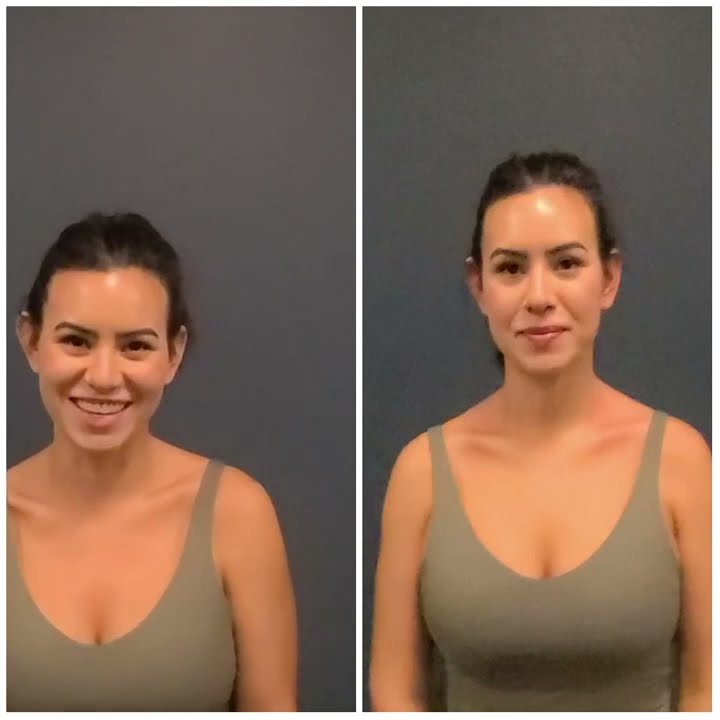 Play video: Client testimonial: Natasha, 4 weeks of neck pain rated 7/10
 “It's too hard to get in shape when I've had knee pain ever since I can remember”
— Cindy, a lifetime of 6/10 knee painYour results may vary.
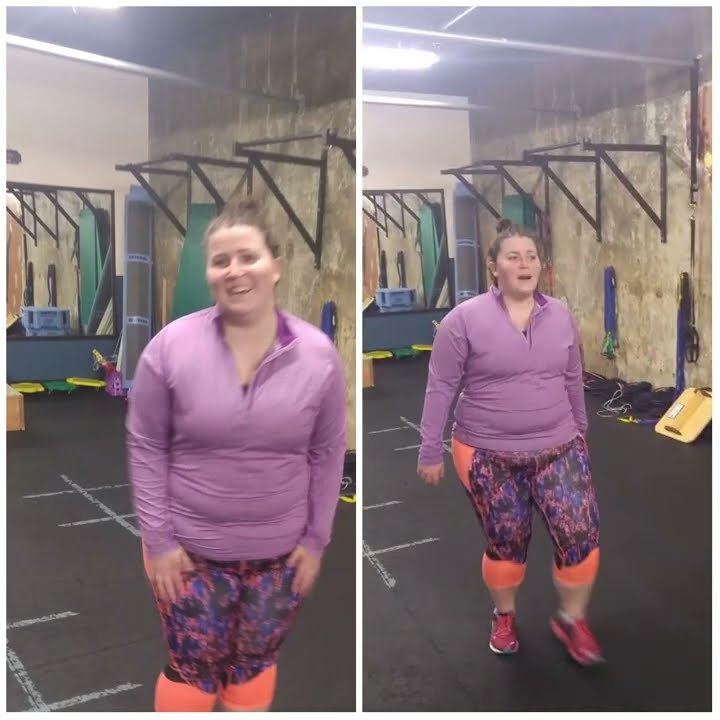 Play video: Client testimonial: Cindy, a lifetime of knee pain rated 6/10
 “I tore my ACL in an MMA match and haven't been able to train since”
— Meghan, 4/10 knee pain after an ACL tearYour results may vary.
 Play video: Client testimonial: Meghan, knee pain after an ACL tear, 4 out of 10 down to 0
 “After my fall my knee was in pain and I couldn't stand on one leg”
— Brad, 6 months of 6/10 knee painYour results may vary.
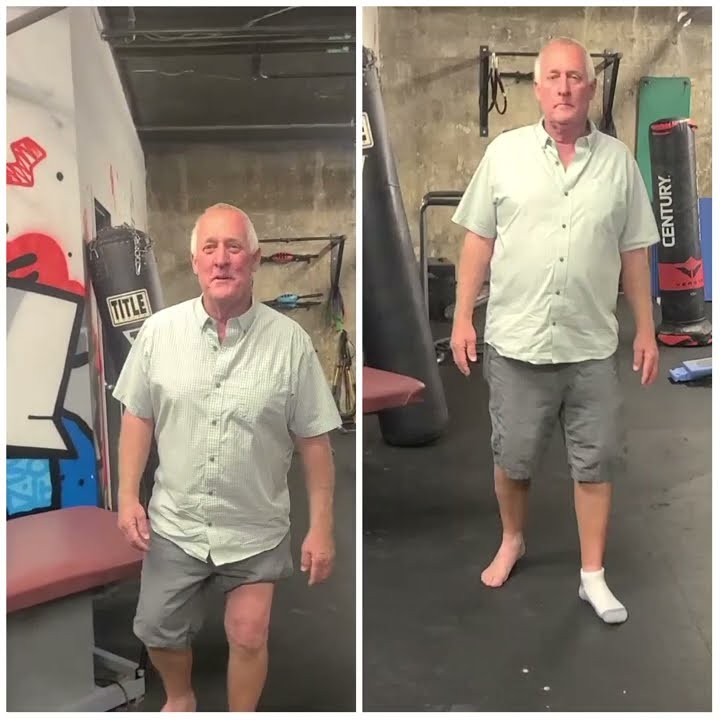 Play video: Client testimonial: Brad, 6 months of knee pain rated 6/10
 “I got surgery on my shoulder 2 years ago and have been getting rolfing and PT”
— Samantha, 5 years of 7/10 shoulder painYour results may vary.
 Play video: Client testimonial: Samantha, 5 years of shoulder pain rated 7/10
 “My shoulder numbness and tingling was so bad I drove 2 hours to see Jamie Atlas”
— Heather, 6 weeks of 10/10 shoulder nerve painYour results may vary.
 Play video: Client testimonial: Heather, 6 weeks of shoulder nerve pain rated 10/10
 “I've been in physical therapy for 6 months and I'm stalled on my results”
— Judy, 6 months of 10/10 shoulder painYour results may vary.
 Play video: Client testimonial: Judy, 6 months of shoulder pain rated 10/10
 “My shoulder pain meant I couldn't take my shirt on or off without hurting”
— Sharon, 4 months of 6/10 shoulder painYour results may vary.
 Play video: Client testimonial: Sharon, 4 months of shoulder pain rated 6/10
 “3 surgeries over 10 years and I still can't get my shoulder above my head”
— Clay, 10 years of 7/10 shoulder painYour results may vary.
 Play video: Client testimonial: Clay, 10 years of shoulder pain rated 7/10
 “Taking my dog for a walk he pulled on my shoulder and now it hurts to move”
— Kendall, 2 weeks of 6/10 shoulder painYour results may vary.
 Play video: Client testimonial: Kendall, 2 weeks of shoulder pain rated 6/10
 “I was squatting at the gym when I felt a pop and my leg went numb”
— Kelly, 12 months of 8/10 back painYour results may vary.
 Play video: Client testimonial: Kelly, 12 months of back pain rated 8/10
 “After the car accident the hospital said I was fine but my back pain says otherwise”
— Dax, 5 days of 10/10 back painYour results may vary.
 Play video: Client testimonial: Dax, 5 days of back pain rated 10/10
 “Playing football has left me with constant back pain that I can't get rid of”
— Matthew, 7 weeks of 7/10 back painYour results may vary.
 Play video: Client testimonial: Matthew, 7 weeks of back pain rated 7/10
 “I went to Pilates to fix my back but it ended up making it worse”
— Colleen, 8 weeks of 7/10 back painYour results may vary.
 Play video: Client testimonial: Colleen, 8 weeks of back pain rated 7/10
 “I was thrown from a horse and couldn't bend over without pain”
— Katrina, 4 weeks of 6/10 back painYour results may vary.
 Play video: Client testimonial: Katrina, 4 weeks of back pain rated 6/10
 “This 9/10 back pain is stopping me from sleeping at night”
— Alexis, 2 months of 10/10 back painYour results may vary.
 Play video: Client testimonial: Alexis, 2 months of back pain rated 10/10
 “My back pain is so bad I can't put on my shoes”
— Penelope, 5 weeks of 7/10 back painYour results may vary.
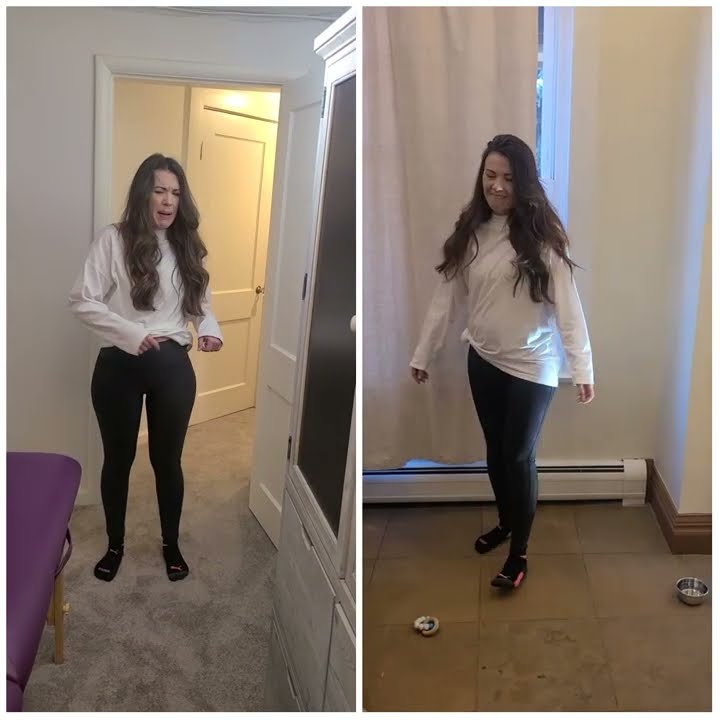 Play video: Client testimonial: Penelope, 5 weeks of back pain rated 7/10
 “Living with back pain has me living at a 7/10 pain that I can't find relief from”
— Chris, 8 weeks of 7/10 back painYour results may vary.
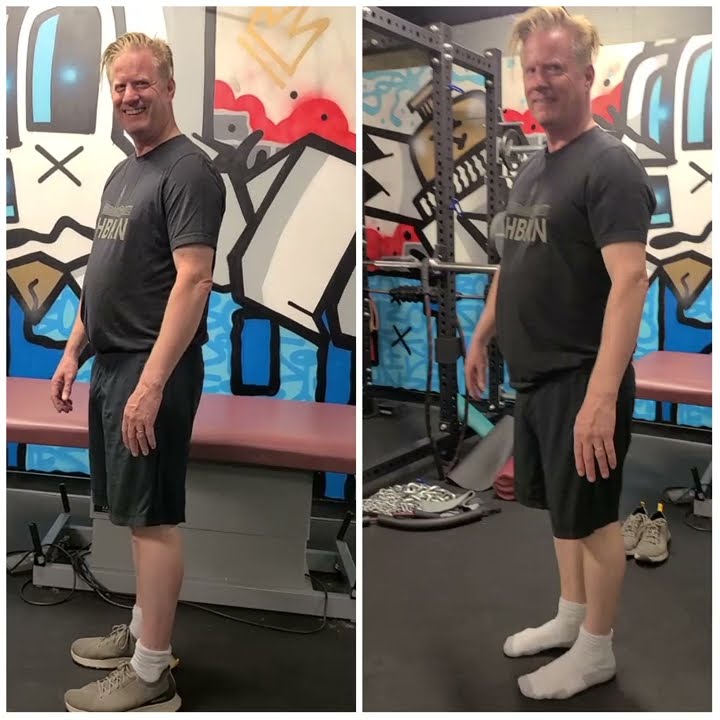 Play video: Client testimonial: Chris, 8 weeks of back pain rated 7/10
 “I have a herniated L4/L5 and my sciatic pain feels like a screwdriver in my back”
— Kendra, 2 years of shooting sciatic painYour results may vary.
 Play video: Client testimonial: Kendra, two years of shooting sciatic pain resolved
 “The doctor told me my spondylolisthesis back pain could only be cured with surgery”
— Tony, 2 weeks of lightning-bolt back painYour results may vary.
 Play video: Client testimonial: Tony, two weeks of severe back pain down to 1 out of 10
 You don't even care, do you. I taught this. In rooms. To other trainers, who then went and taught it to their clients, so somewhere out there is a third generation of this nonsense wearing my fingerprints. And you're already scanning ahead to find out what the right answer is. The audacity of you, dear reader.
Fine. Here's what I said.
The belt drags your foot backwards, so your hamstrings and glutes never have to pull your body forward, so you're training a run with a third of it missing. Great story. It has a mechanism, a villain, and a diagram. I drew that diagram with roughly the confidence of a man explaining to a room full of people that the best defence is, in fact, no defence at all.
Here's the problem. During stance your foot is planted and still relative to the belt, and your body travels over it — which is precisely what happens on the ground. The frame moving with the belt is an inertial frame; the mechanics are the same. Somebody wrote that down in 1980 and I did not read it before getting confident.
And when people actually measured it: no significant difference in peak hip extension, across thirty-three studies and four hundred and ninety-four runners. Then a study of muscle synergies found treadmill running had greater activation in the swing-phase modules — the opposite of the machine doing your work. Then a sprinting study found the treadmill produced a faster extending hip.
Three for three, all against me. The references, since somebody always asks and quite right too: van Ingen Schenau in Medicine & Science in Sports & Exercise, 1980. Van Hooren and colleagues, Sports Medicine, 2020. Oliveira and colleagues in PLOS ONE, 2016, for the synergies. McKenna and Riches, Scandinavian Journal of Medicine & Science in Sports, 2007, for the sprinting.
And yes, alright. Feel free to take that one to the group chat. If you'd like to spend a Sunday under a glaring LED light foraging for meaty study chunks in a haystack of gristly, poorly structured faux-studies to check my working — be my guest. I'll leave the light on.
One difference, and it runs the wrong way for my old argument
There are real differences between the two. The foot meets the belt about ten degrees flatter. The knee moves through around six degrees less range from footstrike to mid-stance. The pelvis rises about a centimetre and a half less.
Most of that is small, some of it sits inside measurement error, and the review that pooled it all rates the certainty of the evidence as low. The honest summary is "largely comparable."
Except for one thing, and it's the one that finishes off the story I used to tell. Achilles tendon loading was measured higher on the treadmill — peak force about 12.5 per cent greater, loading rate about 15.6 per cent greater, cumulative force per kilometre about 14 per cent greater. Meanwhile peak tibial acceleration tends to be greater outdoors.
So the treadmill is not the soft option either. It just distributes the work differently.
What actually gets people, and it's a load problem
In 2025 a group published data on 5,205 runners across 588,071 individual running sessions, asking a very specific question: what happens when a single run is longer than anything you've done in the past month?
More than doubling your longest recent run carried more than twice the injury hazard.
Look at what that measures. Not weekly mileage. Not your monthly total. One run, against your own recent history.
While we're here — the ten per cent rule. Everybody's rule. I've said it out loud, with a straight face, more times than I want to count. It's been tested: 532 novice runners randomised to a thirteen-week graded programme built on it against a standard eight-week one. Injuries: 20.8 per cent versus 20.3 per cent. A second trial, 839 runners, compared building volume against building intensity and found no difference either.
Both things are true at once, and anyone telling you otherwise has read one of them: big single jumps look genuinely risky, and no tidy weekly rule for avoiding them has ever been shown to work.
The thing your winter genuinely did not prepare you for
Not your hamstrings. Downhill.
A treadmill run is flat, or it's uphill. What it essentially never is, in any meaningful dose, is downhill — and downhill is where the muscle lengthens under load while braking you. That is the contraction that actually damages tissue.
The numbers, from a review of the downhill running literature: immediate isometric strength losses of 14 to 55 per cent in the knee extensors and 15 to 25 per cent in the calves. Creatine kinase up around 420 per cent at twenty-four hours and still elevated a week later. Recovery taking four to five days.
And the part that matters for March: prior exposure protects you. The people who take the most damage from a descent are consistently the ones least accustomed to descending.
Now look at what a Denver spring actually does to a person. First proper weekend, sun's out, and you go at that trail with about the same energy as the final race in an 80s ski movie, where the hero has to win the downhill or the rich kids get to keep the lodge and his father's memory is somehow also at stake. Five variables changed at once — distance, hills, terrain, descent, altitude — and every one of them is new since November.
Then on Monday your knee hurts, and you go looking on the internet for whether treadmills wreck your running form, and you find a post some Australian wrote in 2008.
What I would actually do in February
Start descending before you need to. Small doses of downhill, or loaded lowering work if the trails aren't open — step-downs, controlled eccentric work. This is the single most specific thing on the list and almost nobody does it.
Strength train. Across sports, a meta-analysis of randomised trials found strength training reduced injury risk to roughly a third of the control rate, dose-dependently. That's across sports rather than runners specifically, and I'll say so rather than quietly upgrading it — but it's the best-evidenced thing here and it's the thing runners skip.
Change one variable at a time. Longer, or hillier, or rougher underfoot. Not all three on the same Saturday because the weather finally broke.
Two things I'd steer you away from paying for first: your running surface, which the systematic reviews have never established as a risk factor, and the acute-to-chronic workload ratio, heavily promoted for years and since fairly comprehensively taken apart.
More on rebuilding in return to running, and the descending argument in longer form on the hikers page.
One footnote I enjoy more than I should: the landmark study everybody cites about increasing your cadence to reduce knee load — the one that found a five per cent increase cuts energy absorbed at the knee by around twenty per cent — was conducted on a treadmill.
Common questions
So is treadmill running bad for me?
No, and the systematic review evidence is that it is far more similar to overground running than the internet suggests. Pooling 33 studies of 494 runners, the reviewers concluded that spatiotemporal, kinematic, kinetic and muscle measures are largely comparable between the two. There are real differences — the foot lands flatter, the knee moves through slightly less range, the pelvis rises less — but several are small enough to sit inside measurement error, and the review itself rates the underlying evidence as low certainty. The one genuinely notable difference runs the opposite way to the folklore: Achilles tendon loading was measured around 12 to 16 per cent higher on the treadmill.
How should I increase my mileage in spring, then?
Watch single runs rather than weekly totals. In 5,205 runners across 588,071 sessions, injury hazard rose when one run exceeded the longest run of the previous 30 days, and more than doubling that longest run carried more than twice the hazard. What I would not do is trust a tidy weekly percentage — the ten per cent rule was tested in a randomised trial of 532 novice runners and made no difference at all, and a second trial of 839 runners found no difference between building volume and building intensity. Avoiding big single jumps is well supported. No specific rule for doing so has ever been shown to work.
Why do the first spring trail runs hurt so much?
Almost certainly the descending. Running downhill forces muscles to lengthen under load while braking you, which is the contraction that produces genuine muscle damage — a review of the downhill running literature reports immediate strength losses in the knee extensors of roughly 14 to 55 per cent and recovery taking four to five days. A winter indoors gives you essentially no downhill exposure, and prior exposure is protective: the people who take the most damage from a descent are consistently the ones least accustomed to descending.
So the machine was never stealing your hamstrings. It was just never going to teach you to go downhill, and then March arrived and asked you to do five new things in one afternoon.
Which is a less satisfying villain than a treadmill, I grant you. Nobody ever built a following out of "your load management is a bit optimistic."
Anyway. You know it now. Best of luck un-knowing it on the first warm Saturday.
Or you could go into spring with a plan
A 30-minute assessment, $57: your history, my plain read on whether I can help, and one change you can measure before you leave.
Book a 30-minute assessmentOr call (720) 257-9328 · For runners · Knee pain